
Tina Turner is best understood as a powerful rock-soul vocalist with a gritty, chest-forward sound, a commanding midrange, and explosive emotional delivery. Her exact vocal range has not been officially published in a verified technical source, so specific online note spans should be treated as listener-based estimates rather than confirmed measurements.
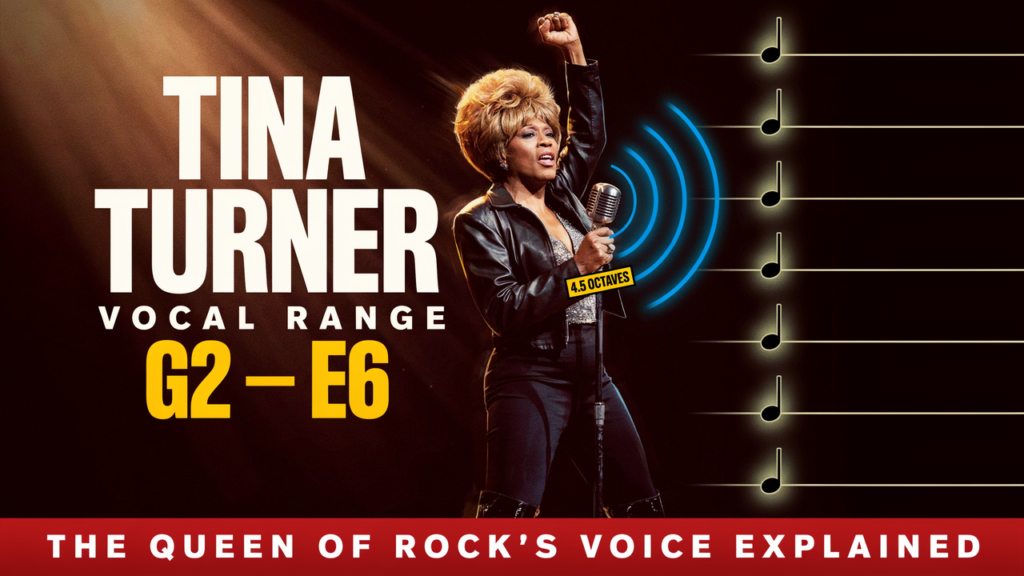
The real story of Tina Turner’s voice is not only how many notes she could sing. It is how she used power, grit, rhythm, and phrasing to make every line feel alive. Her voice could sound raw, urgent, joyful, wounded, and fearless, often within the same performance.
Quick Answer: What Is Tina Turner’s Vocal Range?
Many vocal range discussions describe Tina Turner as having a wide range that reached from low, earthy tones into high rock and soul climaxes. Because those figures come mostly from listener analysis, they should be read as estimates, not official data.
| Category | Best practical answer |
|---|---|
| Commonly cited range | Often estimated as wide, but exact note limits are not officially verified |
| Likely voice type | Mezzo-soprano / dramatic rock-soul belter in popular music context |
| Signature sound | Raspy tone, chest-forward belt, rhythmic attack, emotional grit |
| Best listening examples | “Proud Mary,” “River Deep – Mountain High,” “What’s Love Got to Do with It,” “The Best,” and “Private Dancer” |
If you want to compare your own voice with hers, first measure your vocal range or use a vocal range finder. Tina’s power came from identity and control, not from chasing extreme notes alone.
What Voice Type Was Tina Turner?
Tina Turner is most often described as a mezzo-soprano in a pop and rock context. That label makes sense because her most recognizable sound sits in a strong lower-to-middle female range with enough upper intensity for big climaxes.
Still, “mezzo-soprano” does not fully explain her voice. Classical voice categories do not capture the way she used rasp, spoken attack, blues phrasing, and rock energy. A voice type test can help singers understand general categories, but Tina Turner is better analyzed as a rock-soul performer than as a classical Fach example.
Why Her Voice Sounded So Powerful
Tina Turner’s power came from the way she delivered notes. She often sang with a chest-forward quality, sharp rhythmic phrasing, strong consonants, and a rasp that made the vocal feel urgent. Even when the melody was simple, her delivery made it feel larger than the written notes.
Her tone also had a strong texture. Instead of a perfectly smooth pop sound, she used grain, bite, and breathy intensity. That made her voice instantly recognizable and helped it cut through loud bands, horns, and big stage arrangements.
Belting, Grit, and Register Use
Tina Turner’s most famous vocal moments often feel like belts, but a healthy rock belt is not just yelling. It requires breath, resonance, vowel shaping, and enough control to repeat the phrase without losing the voice.
If you are learning from her style, study how to belt carefully. It also helps to understand chest voice vs head voice, because Tina’s strongest sound often comes from chest-dominant color while still needing release as the pitch rises.
Best Songs for Hearing Tina Turner’s Vocal Style
- “Proud Mary”: shows her rhythmic build, stage command, and explosive upper energy.
- “River Deep – Mountain High”: highlights her early soul-rock intensity and huge emotional projection.
- “What’s Love Got to Do with It”: reveals a more controlled, intimate, and mature vocal approach.
- “The Best”: shows the anthemic side of her voice with strong phrasing and stamina.
- “Private Dancer”: emphasizes nuance, texture, and storytelling rather than pure volume.
How Her Voice Changed Over Time
Tina Turner’s voice changed across her career, as every singer’s voice does. Earlier performances often sound rawer and more explosive. Later performances can sound more controlled, smoky, and authoritative. That evolution does not reduce her impact; it shows how a great singer adapts tone, key, phrasing, and energy over decades.
For singers, this is an important lesson. Range is not fixed as a trophy number. Your usable range changes with age, health, practice, rest, and repertoire. Basic vocal health for singers matters if you want a voice that lasts.
Tina Turner Compared With Other Female Vocalists
Tina Turner belongs among singers whose identity is bigger than a range chart. Compared with Aretha Franklin’s vocal range, Tina’s style is more rock-driven and gritty. Compared with Cyndi Lauper’s vocal range, Tina’s sound is earthier and more chest-forward.
She also fits naturally into discussions of the mezzo-soprano vocal range, but her real legacy is performance energy: the way she made a phrase move, bite, and connect.
Why Exact Note Claims Can Be Misleading
Celebrity vocal range charts often combine live clips, studio tracks, backing parts, screams, and one-off notes. That can be fun, but it does not always represent a singer’s comfortable, repeatable range.
For Tina Turner, the more useful framework is:
- Core range: the midrange and belt area where her voice sounded most recognizable.
- Stylistic effects: rasp, grit, shouts, and spoken colors that add drama.
- Estimated extremes: high or low notes identified by listeners, not official measurements.
Tina Turner Vocal Range FAQs
What was Tina Turner’s vocal range?
Tina Turner’s exact vocal range has not been officially verified. Online estimates often describe a wide range, but those numbers should be treated as listener-based estimates rather than confirmed technical measurements.
What voice type was Tina Turner?
She is commonly described as a mezzo-soprano in popular music terms, but her real identity was a rock-soul belter with a gritty, chest-forward sound.
Did Tina Turner have a raspy voice?
Yes. Her raspy tone was one of her signatures. It added urgency and emotional force, especially in rock and soul performances.
Was Tina Turner a better singer because of range?
Her greatness was not only about range. Her phrasing, rhythm, tone, stage command, and emotional conviction mattered more than any single highest or lowest note.
Can beginners sing like Tina Turner?
Beginners can study her energy and phrasing, but should avoid forcing rasp or loud belts. Build clean technique first, then add stylistic grit carefully.
Final Takeaway
Tina Turner’s vocal range is best understood as a powerful, mezzo-soprano-leaning rock-soul voice with grit, stamina, and unforgettable emotional force. Exact note spans should stay in the estimated category, but her artistic impact is clear: she turned voice, rhythm, and raw presence into one of the most recognizable sounds in popular music.
Erika Parker is a vocal analysis and singing education writer at Vocal Range Test. She focuses on vocal range testing, voice type analysis, pitch recognition, and singing tools for vocalists, musicians, choir singers, and beginners.