
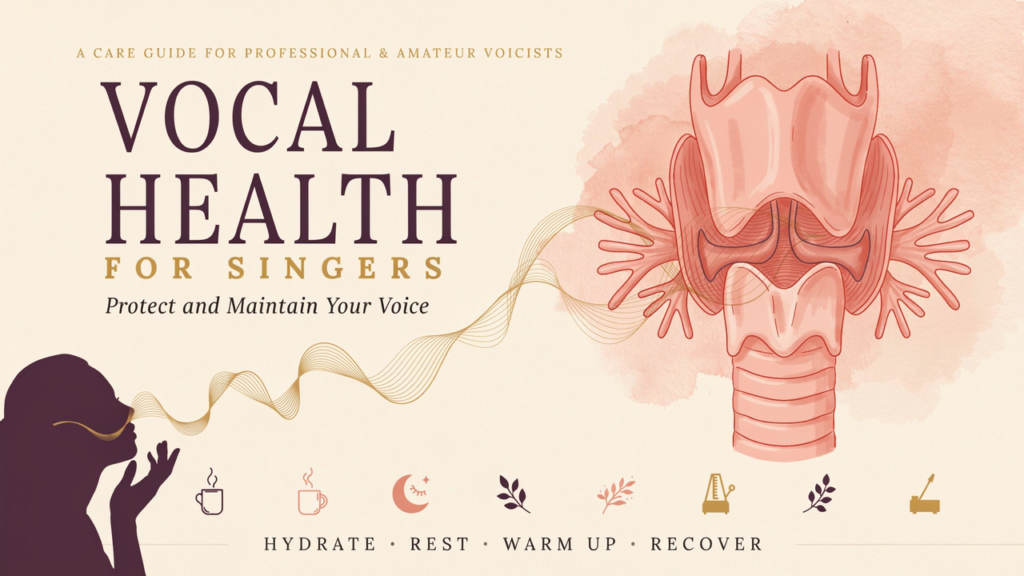
Good vocal health for singers means keeping your vocal folds hydrated, rested, flexible, and free from avoidable strain. The safest routine is simple: warm up gently, sing with efficient breath support, avoid forcing tired or hoarse sounds, recover after heavy use, and get medical help when symptoms last or feel unusual.
Your voice is not just an artistic tool; it is part of your body. The National Institute on Deafness and Other Communication Disorders explains that voice is produced when air from the lungs makes the vocal folds vibrate inside the larynx, and it lists hoarseness, loss of high notes, throat strain, and repeated throat clearing as possible signs of a voice problem (NIDCD). For singers, those signs deserve attention because small issues can grow when you keep rehearsing through them.
Quick Vocal Health Checklist for Singers
| Habit | Why it matters | What to do |
|---|---|---|
| Hydration | Dry vocal folds can feel stiff and irritated | Drink water through the day and use humidified air in dry rooms |
| Warm-up | Cold singing can make coordination harder | Start with gentle humming, lip trills, sirens, and easy range work |
| Rest | Tired tissue needs recovery time | Take vocal breaks after rehearsals, gigs, teaching, or long calls |
| Technique | Throat pressure can overload the folds | Use breath support, balanced registration, and comfortable keys |
| Warning signs | Persistent hoarseness can signal a deeper issue | Stop pushing and consider an ENT or voice-specialized clinician |
What Vocal Health Actually Means
Vocal health is the condition of your vocal folds and the habits that support them: hydration, sleep, breathing, posture, technique, recovery, and general wellness. A healthy voice usually feels responsive. You can sing without pain, speak after singing without raspiness, and move through your range without sudden loss of notes.
A tired voice is different from a warmed-up voice. Warm singing can feel open and flexible. Vocal fatigue feels heavier: the throat may feel scratchy, high notes may disappear, and you may need more effort to make the same sound. That is your signal to reduce load, not to push harder.
Hydration Helps, But It Is Not Instant Magic
Water matters because the vocal folds need moisture to vibrate efficiently. But drinking water five minutes before a performance does not directly coat the vocal folds; it supports the body over time. Think of hydration as a daily baseline, not an emergency fix.
For practical singing days, sip water regularly, limit excessive alcohol, be mindful with caffeine if it dries you out, and consider a clean humidifier if your room is dry. Steam from a shower or gentle inhalation can also soothe the upper airway, but avoid very hot steam that could burn or irritate tissue.
Warm Up Before Demanding Singing
A warm-up should prepare the voice, not exhaust it. Start small: quiet humming, lip trills, straw phonation, gentle sirens, and easy five-note patterns. Then move toward the range, volume, and style you will actually use.
If you need a full routine, use this guide on how to warm up your voice. Higher voices can adapt the soprano and tenor warm-up exercises, while lower voices can use the baritone and bass warm-up exercises. The goal is not to prove range during warm-up; it is to make the voice ready.
Use Breath Support Instead of Throat Force
Many vocal health problems begin when singers try to create volume, high notes, or intensity by squeezing the throat. Efficient singing uses breath, resonance, and registration instead of raw pressure. You should feel effort in the body and coordination, not sharp pressure inside the throat.
Breathing work is especially important if you sing long phrases, belt, teach, or perform live. Start with simple breathing exercises for singers, then connect the breath to quiet, easy notes before using it in louder songs.
Do Not Force High Notes When the Voice Is Tired
Losing high notes is one of the clearest signs that your voice may need rest or gentler technique. Sometimes the issue is temporary fatigue, dryness, illness, or a demanding week. Sometimes it is registration: trying to drag heavy chest voice higher than it wants to go.
For high notes, work gradually. Learn how to sing high notes without straining, and understand the difference between chest voice vs head voice. Many singers also confuse a light head-dominant sound with falsetto, so this guide on head voice vs falsetto can help you choose the right coordination instead of pushing.
Rest Is Part of Training
Voice rest does not always mean total silence. For everyday fatigue, it may mean fewer calls, less loud talking, avoiding rehearsal after a rough gig, or taking short “vocal naps” during the day. If you are sick, hoarse, or losing voice quality, reduce singing until the voice feels normal again.
Whispering is not always safer. For some people, whispering creates extra tension. If speaking hurts, use a soft, easy voice only when necessary, communicate by text when possible, and get help if symptoms do not improve.
Protect Your Voice Outside Singing
Singers often blame songs for vocal strain, but daily speaking habits can be just as demanding. Talking over noise, shouting at events, teaching without amplification, and long phone calls can tire the voice before rehearsal even begins.
- Use a microphone when you need to speak or sing over noise.
- Avoid yelling across rooms or singing loudly without warm-up.
- Do not clear your throat repeatedly; sip water or swallow gently instead.
- Sleep enough, especially before performances and recording sessions.
- Avoid smoke and secondhand smoke because they irritate the vocal folds.
- Manage reflux symptoms with a clinician if heartburn or throat irritation keeps returning.
Food, Drinks, and Reflux Awareness
No food can instantly “heal” the voice, but your diet can affect comfort. Spicy meals, heavy late-night eating, alcohol, and reflux triggers may bother some singers, especially before sleep or performance. If reflux reaches the throat area, it can irritate the voice even when you do not feel classic heartburn.
Keep meals lighter before singing, notice your personal triggers, and avoid treating persistent throat symptoms with random supplements. If reflux, coughing, or throat clearing keeps returning, that is a medical question, not just a singing technique issue.
When to Stop Singing and Get Help
Stop pushing your voice if singing causes pain, sudden loss of range, repeated cracking that is not normal for you, hoarseness after normal use, or a feeling that your voice is getting worse as you continue. A single tired day can happen, but repeated or persistent symptoms deserve attention.
Consider seeing an ENT, laryngologist, speech-language pathologist, or qualified voice-specialized clinician if you have:
- Hoarseness or voice change that does not improve.
- Pain when speaking or singing.
- Sudden loss of high notes that does not return with rest.
- Breathiness, weakness, or instability that is new for you.
- A professional singing or speaking schedule that you cannot complete because of voice symptoms.
This article is educational and cannot diagnose vocal injury. If something feels sharp, sudden, or persistent, get evaluated instead of trying to “sing through it.”
A Simple Daily Vocal Health Routine
- Morning: hydrate, speak gently at first, and avoid loud early singing before the voice wakes up.
- Before practice: do 5 to 10 minutes of gentle warm-up before demanding songs.
- During practice: stop before fatigue turns into strain; change keys if the song is too high.
- After practice: cool down with easy humming or light slides, then rest from unnecessary talking.
- Weekly: use a vocal range finder only when the voice feels healthy, not when you are sick or hoarse.
Vocal Health for Singers FAQs
How do singers keep their voices healthy?
Singers keep their voices healthy by staying hydrated, warming up gently, using efficient technique, resting after heavy use, avoiding smoke and shouting, and getting help when hoarseness or pain continues.
Is vocal rest good for singers?
Yes. Vocal rest can help when the voice is tired, hoarse, or recovering from illness. It does not replace medical care for persistent symptoms, but it is an important recovery habit.
What should singers avoid for vocal health?
Singers should avoid yelling, forcing high notes, singing while hoarse, smoking, excessive alcohol, repeated throat clearing, and long speaking sessions in loud environments.
Does drinking water fix a tired voice immediately?
No. Water supports vocal fold function over time, but it is not an instant repair. If the voice is tired, combine hydration with rest, gentle use, and less vocal load.
When should a singer see a doctor for voice problems?
A singer should seek professional help if hoarseness, pain, sudden range loss, breathiness, or major voice change persists or interferes with singing or speaking work.
Final Takeaway
Vocal health is not one trick; it is the way you manage load, recovery, hydration, technique, and warning signs every day. Warm up before demanding singing, rest before fatigue becomes injury, train high notes gradually, and treat persistent hoarseness or pain as a reason to get expert help. A healthy voice is not just a wider range; it is a voice you can trust tomorrow too.
Erika Parker is a vocal analysis and singing education writer at Vocal Range Test. She focuses on vocal range testing, voice type analysis, pitch recognition, and singing tools for vocalists, musicians, choir singers, and beginners.