
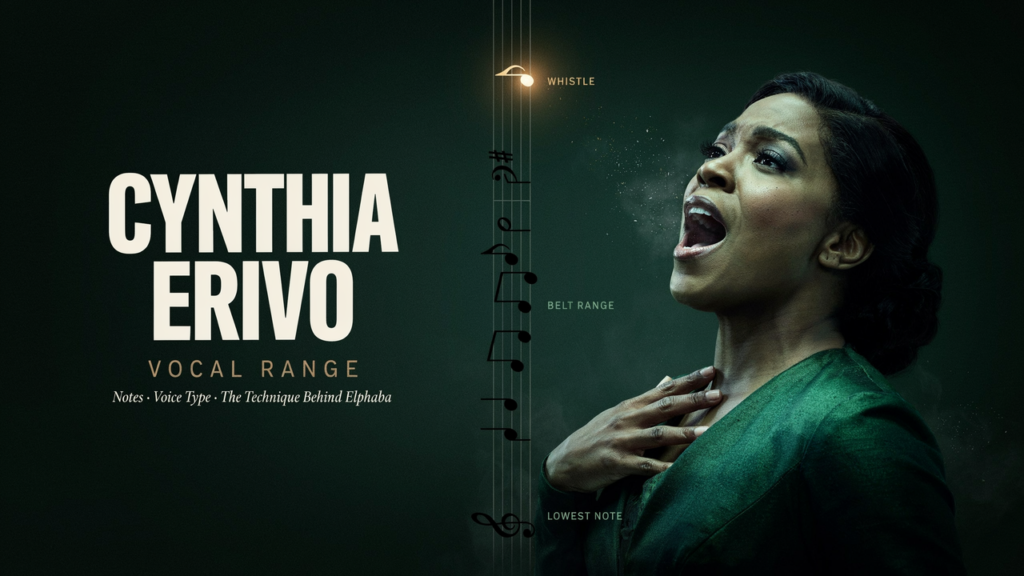
Cynthia Erivo’s vocal range is commonly cited around C#3 to D6, which is a little over three octaves. That number should be treated as a practical performance estimate, not a formal clinical measurement, because her full range can change with role, key, arrangement, microphone setting, and vocal condition.
What makes Erivo stand out is not just the high note. It is the way she connects theatre belt, gospel color, clear head voice, and emotional phrasing without making the technique feel separate from the story. For singers studying her voice, the useful question is not only “how high can she sing?” but how she moves through registers while keeping the lyric alive.
Quick Answer: Cynthia Erivo’s Estimated Range
| Commonly cited range | C#3 to D6 |
| Approximate span | Just over 3 octaves |
| Likely category | Soprano-leaning musical theatre voice with strong high-mezzo qualities |
| Best-known vocal settings | The Color Purple, Wicked, concert performances, film vocals |
| Signature strengths | Mixed belt, emotional control, dynamic phrasing, bright upper extension |
If you want to compare your own notes with this kind of range estimate, start with a simple vocal range guide or use the vocal range finder to identify your comfortable low, middle, and high notes.
Is Cynthia Erivo a Soprano or Mezzo-Soprano?
Cynthia Erivo is often described as a soprano because of her bright upper register, high extension, and the way she can carry musical theatre climaxes above the staff. At the same time, some listeners hear high mezzo-soprano qualities in her lower color, chest resonance, and dramatic belt placement.
The most accurate practical description is this: Erivo has a soprano-leaning theatre voice with mezzo strength in the middle. That matters because musical theatre categories do not always behave like strict classical Fach labels. A singer can have soprano top notes while still using a darker, speech-driven belt in the middle.
For more context, compare the tone goals in a soprano vocal range with the heavier middle placement of a mezzo-soprano vocal range. Erivo sits in the interesting overlap between those worlds.
What the C#3 to D6 Range Means
A C#3 low note gives Erivo enough lower color for intimate acting moments, but her identity as a singer is built much more around the middle and upper range. Her money notes usually live where speech, belt, and mix meet. That is why her high notes feel dramatic rather than merely decorative.
The upper D6, when cited, is one whole tone above soprano high C. It points to impressive extension, but it does not mean every song is sung near D6 or that the note is the center of her working range. For real singing, tessitura matters more than one extreme note.
A better way to understand her voice is by zones:
- Lower range: warm, direct, and actorly rather than bass-heavy.
- Middle range: speech-connected, emotionally intense, and strong enough for theatre storytelling.
- Upper belt/mix: bright, ringing, and carefully balanced so the sound can stay powerful without becoming shouted.
- Head voice extension: clear and flexible when the arrangement asks for lighter high notes.
Why Her Mixed Belt Sounds So Powerful
Erivo’s best-known vocal moments often come from a controlled mixed belt. That means she is not simply pushing chest voice upward. She blends resonance, vowel shape, breath pressure, and head-voice coordination so the sound can stay intense while still releasing upward.
This is why her climactic notes can sound fierce without losing musical shape. Singers who want to study this part of her sound should understand mixed voice before trying to copy the volume. The skill is not just singing loudly; it is learning how to keep the note energized without locking the throat.
Her belt also works because she is an actor. The emotional reason for the note is clear. In songs like “I’m Here” or major Elphaba moments, the sound grows out of the character’s need rather than feeling like a separate vocal trick.
Cynthia Erivo in The Color Purple
Erivo’s breakthrough in The Color Purple showed the full shape of her theatre voice: grounded low phrasing, gospel-influenced dynamics, and a soaring emotional build. Her performance as Celie earned major recognition, including the 2016 Tony Award for Best Actress in a Musical, listed by the official Tony Awards archive.
“I’m Here” is one of the clearest examples of why her voice connects so strongly. The song needs more than range. It needs patience, restraint, release, and believable growth from vulnerability into power. Erivo’s version works because the vocal choices follow the emotional arc.
Cynthia Erivo as Elphaba in Wicked
Elphaba is one of the most demanding modern musical theatre roles because it requires stamina, sustained belt, spoken acting, and high emotional pressure across the full score. Erivo’s casting makes sense because her voice can carry both the character’s intensity and the clean high placement needed for the role’s biggest moments.
In Wicked, the challenge is not only a high note at the end of a song. It is surviving the whole vocal journey: conversational scenes, ensemble sections, lyrical passages, and explosive climaxes. That is where Erivo’s mix and acting discipline become especially important.
If you are learning from this style, do not jump straight to the loudest phrase. Build the coordination first with healthy belting technique, then add volume only when the note remains free.
How Cynthia Erivo Compares With Ariana Grande
Cynthia Erivo and Ariana Grande are both agile, high-level singers, but their strengths sit in different places. Grande is known for pop agility, whistle-like upper effects, and smooth melisma. Erivo is more theatre-centered, with a dramatic belt, text-first phrasing, and a grounded acting approach.
That contrast is part of what makes their Wicked pairing interesting. Grande’s Glinda can feel sparkling and ornamented, while Erivo’s Elphaba can feel direct, intense, and emotionally weighted. You can compare the two more closely in this Ariana Grande vocal range breakdown or use the singer comparison tool for side-by-side range context.
Best Songs to Hear Cynthia Erivo’s Range
To understand Erivo’s voice, listen for the way each performance uses a different part of her instrument. Do not judge her range from one climactic clip alone.
- “I’m Here” – best for emotional build, belt, and dynamic storytelling.
- “Defying Gravity” – useful for hearing Elphaba-style stamina and upper mix.
- “Stand Up” – shows gospel color, lift, and dramatic phrasing.
- “I Couldn’t Be Happier” and other Wicked-related material – helpful for hearing character contrast and theatre tone.
- Live concert performances – often reveal how she shapes vowels and dynamics outside a fixed cast recording.
Can You Train to Sing Like Cynthia Erivo?
You can train some of the same skills, but you should not try to copy her exact sound. Her range, tone, and stamina come from years of vocal training, stage experience, acting discipline, and musical instinct. The healthier goal is to study the principles behind the sound.
Focus on these areas first:
- Build a reliable warm-up before singing high or loud.
- Strengthen your middle voice before chasing extreme notes.
- Practice mix at moderate volume before adding belt.
- Keep vowels narrow enough that high notes can release.
- Record yourself to check whether the sound is free or forced.
Range charts can help you map the notes, but they cannot measure control, tone, or musical storytelling. Use a vocal range chart as a reference, then let comfort and consistency guide your practice.
FAQ
What is Cynthia Erivo’s vocal range?
Cynthia Erivo’s vocal range is commonly cited as C#3 to D6, a span of a little over three octaves. Treat that as an estimated performance range rather than a formally verified medical measurement.
What voice type is Cynthia Erivo?
She is best described as a soprano-leaning musical theatre singer with strong high mezzo-soprano qualities. Her upper extension suggests soprano ability, while her middle register has dramatic weight and warmth.
Is Cynthia Erivo a soprano or mezzo-soprano?
In practical theatre terms, she sits between labels. She can sing soprano-style high notes, but her belt and lower-middle color often make listeners hear mezzo qualities too.
What song best shows Cynthia Erivo’s voice?
“I’m Here” from The Color Purple is one of the best examples because it shows range, restraint, emotional build, belt, and storytelling in one performance.
How does Cynthia Erivo compare to Ariana Grande in Wicked?
Erivo’s sound is more theatre-belt and text-driven, while Grande’s is more pop-agile and ornamented. That contrast helps separate Elphaba’s grounded intensity from Glinda’s lighter sparkle.
Final Thoughts
Cynthia Erivo’s estimated C#3 to D6 range is impressive, but the real lesson is how she uses it. Her voice works because power, mix, diction, breath, and acting all serve the same emotional purpose. That is why her performances feel bigger than a range number.
Erika Parker is a vocal analysis and singing education writer at Vocal Range Test. She focuses on vocal range testing, voice type analysis, pitch recognition, and singing tools for vocalists, musicians, choir singers, and beginners.