
Some days you don’t have time for a long practice session, but you still want your voice to feel ready before singing. That’s where a quick vocal warm-up routine comes in. Even 5 minutes of smart, focused exercises can prepare your voice for singing safely and help you avoid strain.
This guide gives you fast, effective warm-ups you can use anytime — before rehearsals, performances, or even karaoke night.
If you’re unsure about your vocal range, check your starting point with the free Vocal Range Calculator before you begin.
Why Quick Warm-Ups Work
Even short warm-ups help because they:
- Increase blood flow to vocal muscles
- Relax tension in the throat and neck
- Improve breath support and airflow control
- Reduce risk of vocal fatigue or cracking
Think of it like stretching before a workout — your voice needs gentle movement before hitting full power.
When to Use a Quick Warm-Up Routine
- Before singing practice or choir rehearsals
- Right before going on stage
- During breaks in long recording sessions
- For teachers, speakers, or anyone using their voice professionally
A fast warm-up is not a replacement for full training sessions, but it’s perfect for busy days or last-minute preparation.
Essential Tips Before Warming Up
- Stay hydrated: Sip water before starting
- Use good posture: Stand tall, shoulders relaxed
- Keep volume moderate: Focus on ease, not loudness
- Listen to your body: Stop if you feel pain or strain
More long-term tips are in our Vocal Health Guide.
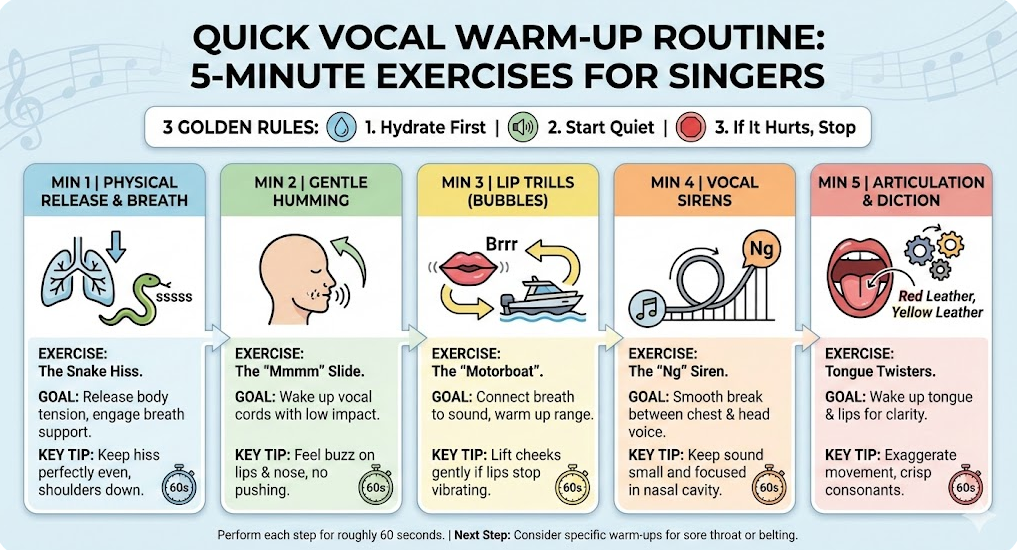
5-Minute Quick Vocal Warm-Up Routine
This routine is designed for speed and efficiency:
1. Diaphragmatic Breathing – 1 minute
- Inhale deeply through your nose, letting your stomach expand
- Exhale slowly on a “sss” sound
- Builds airflow control for singing
For detailed techniques, read Breathing Techniques for Singing.
2. Lip Trills – 1 minute
- Relax lips and blow air to create a “brrr” sound
- Move up and down 5-note scales lightly
- Warms up vocal cords while keeping tension low
3. Humming on Scales – 1 minute
- Hum on “mmm” sounds through simple scales
- Focus on vibration around the lips and nose
- Improves resonance and tone clarity
4. Siren Glides – 1 minute
- Glide smoothly from low → high → low on “oo”
- Connects chest and head voice for range flexibility
Check Chest Voice vs Head Voice for tips on blending registers.
5. Vowel Singing – 1 minute
- Sing vowels like “ah,” “ee,” and “oo” on short scales
- Helps with diction, tone, and pitch control
Main Interactive Tools:
- Vocal Range Test – find your exact highest and lowest notes online in seconds.
- Singer Comparison Tool – compare your vocal range with famous singers and see where you align.
- AI Voice Analysis – get instant feedback on your tone, pitch stability, and clarity through advanced AI.
- Song Key Finder – discover songs that naturally fit your vocal range and tessitura.
- Ear Training Game – improve pitch accuracy and interval recognition through fun listening challenges.
- Microphone Tester – check your mic setup before testing your range or recording vocals.
Quick Warm-Up Plan Table
| Exercise | Time | Focus |
|---|---|---|
| Diaphragmatic Breathing | 1 min | Airflow & support |
| Lip Trills | 1 min | Relaxation & range prep |
| Humming on Scales | 1 min | Resonance & tone quality |
| Siren Glides | 1 min | Register blending & flexibility |
| Vowel Singing | 1 min | Diction & pitch accuracy |
Warm-Up Variations for Different Voice Types
| Voice Type | Quick Focus Exercise |
|---|---|
| Soprano | Siren Glides for high notes |
| Mezzo-Soprano | Vowel singing in mid-range |
| Contralto | Descending scales for low resonance |
| Tenor | Mix voice sirens + vowel clarity drills |
| Baritone | Breath control + mid-range warm-ups |
| Bass | Low humming exercises for resonance |
For full training routines, see Daily Vocal Warm-Up Exercises.
Mistakes to Avoid During Quick Warm-Ups:
- Skipping breath support entirely
- Singing too loudly at the start
- Ignoring tension in the shoulders or neck
- Using high-pressure exercises without proper technique
Remember: warm-ups prepare, not push.
When to Use a Longer Warm-Up!
Quick routines work for emergencies, but longer sessions are needed:
- Before major performances or long rehearsals
- When expanding range or learning new songs
- After illness or long breaks from singing
For range growth, check Expand Vocal Range Safely for step-by-step methods.
Daily Quick Warm-Up Routine Summary
- 1 min – Diaphragmatic Breathing
- 1 min – Lip Trills
- 1 min – Humming on Scales
- 1 min – Siren Glides
- 1 min – Vowel Singing
Done in under five minutes, this leaves your voice ready, flexible, and healthy for singing or speaking.
FAQs About Quick Vocal Warm-Ups
Q1: Are quick warm-ups as effective as longer ones?
They prepare your voice for short sessions but don’t replace full training routines.
Q2: Can I use quick warm-ups before public speaking?
Yes, they improve clarity, projection, and vocal stamina for speakers too.
Q3: How often should I warm up my voice?
Daily, even if you don’t sing professionally. A few minutes keeps your voice healthy.
Q4: Can beginners use this routine?
Absolutely. It’s safe and simple for all skill levels.
Q5: What if my voice feels tired after warming up?
Rest, hydrate, and avoid forcing high or loud notes.
- Before starting, it’s useful to confirm where your notes sit by checking a simple how to calculate vocal range.
- Many singers get better results when they understand how vocal cords produce different pitches.
- To keep short warm-ups effective, following daily exercises to increase stamina supports endurance.
- If tension builds quickly, learning the best posture for singing can improve airflow.
- High notes feel easier after practicing proven breathing techniques to improve vocal range.
- To see whether warm-ups are expanding your voice, a quick how to measure vocal range adds clarity.
- When choosing exercises, this guide on what is a good vocal range helps keep expectations realistic.