
Your voice is a physical instrument made of muscle and tissue, and like any instrument it needs care to stay reliable. Good vocal health is what lets you sing consistently, extend your range safely, and avoid the hoarseness, strain, and injuries that derail singers. The habits below are the foundation every healthy singer relies on.
What Vocal Health Actually Means
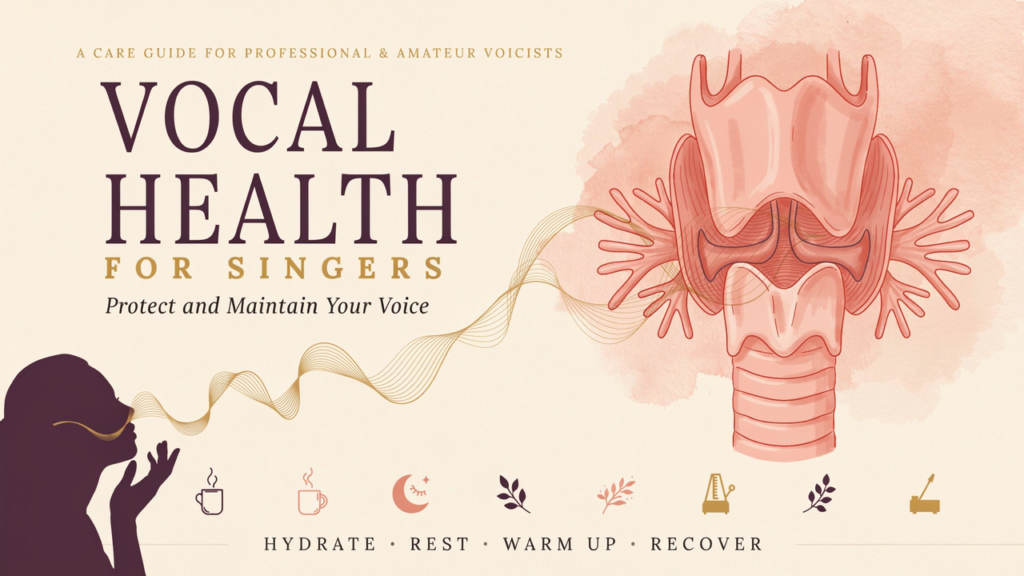
Vocal health is the overall condition of your vocal folds and the systems that support them — your breathing, hydration, and muscle coordination. Healthy vocal folds are well-hydrated, free of swelling or strain, and able to come together cleanly to produce sound.
Most vocal problems singers face — hoarseness, a tired voice, losing high notes, cracking — come from a small set of preventable causes: dehydration, strain, lack of rest, and poor technique. Protecting your voice is mostly about avoiding those.
Hydration: The Single Most Important Habit
Your vocal folds need a thin layer of moisture to vibrate freely. When you’re dehydrated, the folds become dry and irritated, which kills tone and increases injury risk.
- Drink water consistently throughout the day, not just before singing. Hydration happens systemically over hours.
- Nothing you drink directly coats your vocal folds. Your larynx is separate from your esophagus, so hydration works by keeping your whole body — and therefore your folds — moist over time.
- Limit dehydrating drinks like excessive caffeine and alcohol.
- Consider steam. Inhaling steam (a hot shower or a bowl of hot water) is one of the few ways to add moisture directly to the vocal tract.
Always Warm Up and Cool Down
Singing on cold vocal folds is like sprinting without stretching — it invites strain. A proper warm-up increases blood flow, loosens the muscles, and prepares the folds for the demands of singing.
- Warm up for 5–10 minutes before serious singing with gentle humming, lip trills, and sirens. Follow a structured routine in our guide on how to warm up your voice.
- Match your warm-up to your voice type. We have targeted routines for soprano and tenor warm-ups and baritone and bass warm-ups.
- Cool down after singing with gentle humming on descending scales. Cooling down helps the voice recover, much like stretching after exercise.
Rest Your Voice
Vocal folds are muscle tissue, and muscles need recovery. Overuse is a leading cause of vocal fatigue and injury.
- Take vocal rest after heavy singing — quiet time with minimal talking lets the folds recover.
- Avoid pushing a tired voice. If your voice feels fatigued or hoarse, stop. Singing through it risks real damage.
- Sleep matters. Your whole body, including your vocal folds, recovers during sleep.
- Avoid vocal strain off the stage too — yelling, screaming, and long periods of loud talking tax the same folds you sing with.
Use Healthy Technique
Poor technique is one of the most common causes of vocal damage, because straining forces the vocal folds to work against each other.
- Sing with breath support from the diaphragm rather than squeezing the throat — our breathing exercises for singers build it.
- Don’t push for volume or high notes beyond what you can produce freely. Learn to hit high notes without strain.
- Stay within your range. Singing songs far outside your comfortable range forces strain. Know your limits with the vocal range finder and pick songs that fit using the song key finder.
- Never sing through pain. Pain is a signal to stop, always.
What Damages Your Voice (and What to Avoid)
Steer clear of these common voice-harming habits:
- Smoking and vaping, which irritate and dry the vocal tract
- Excessive throat clearing, which slams the vocal folds together — sip water or swallow instead
- Whispering when hoarse, which can strain the folds more than gentle speaking
- Loud talking in noisy environments for long periods
- Singing when sick, especially with laryngitis — give the folds time to heal
- Dehydration, dry air, and excessive caffeine or alcohol
Foods and Drinks for Vocal Health
- Best: water and warm (not hot) herbal teas to support hydration
- Helpful: steam inhalation for direct moisture
- Limit before singing: dairy (can thicken mucus for some singers), very cold drinks, and heavy meals that cause reflux
- Avoid before singing: excessive caffeine, alcohol, and anything dehydrating
Food and drink don’t touch your vocal folds directly — they help mainly through overall hydration and by avoiding irritation like acid reflux.
Signs You May Be Damaging Your Voice
See a doctor or qualified ENT/laryngologist if you notice persistent hoarseness lasting more than two weeks, pain when singing or speaking, losing notes at the top or bottom of your range, a voice that tires quickly or “gives out,” or recurring loss of voice. These can be signs of vocal strain, nodules, or other issues that need professional assessment. Early attention prevents small problems from becoming serious ones.
A Simple Daily Vocal Health Checklist
- Drink water steadily all day
- Warm up before singing, cool down after
- Stay within your comfortable range
- Sing with breath support, never through pain
- Rest your voice after heavy use and when tired
- Avoid smoking, excessive throat clearing, and singing while sick
- Get enough sleep
Frequently Asked Questions
How can singers keep their voice healthy? The core habits are consistent hydration, warming up before and cooling down after singing, resting the voice after heavy use, singing with proper breath support within your range, and avoiding irritants like smoking and excessive throat clearing.
What should singers drink for their voice? Water is best, sipped consistently throughout the day, with warm herbal teas as a good second choice. Steam inhalation adds direct moisture. Limit caffeine and alcohol, which are dehydrating, and avoid very cold drinks right before singing.
Is it bad to sing every day? Singing daily is fine and even beneficial if you use healthy technique, warm up, and don’t push a tired voice. Problems arise from straining, skipping warm-ups, or singing through fatigue — not from regular, well-supported practice.
How do I know if I’ve damaged my voice? Warning signs include hoarseness lasting more than two weeks, pain while singing, losing notes from your range, or a voice that tires and gives out. If you notice these, rest your voice and consult an ENT or laryngologist.
Erika Parker is a vocal analysis and singing education writer at Vocal Range Test. She focuses on vocal range testing, voice type analysis, pitch recognition, and singing tools for vocalists, musicians, choir singers, and beginners.