
My Days is an artist for whom publicly available vocal documentation is limited at the time of writing — no definitive biography, formal voice type analysis, or note-by-note range profile appears in mainstream music databases, vocal analysis communities, or major entertainment publications.
This is not unusual for emerging or niche artists who may have a dedicated fanbase and documented recordings without having reached the mainstream media coverage threshold that generates formal vocal documentation. What follows is an honest account of what can be determined from available sources, with appropriate acknowledgment of the limits of that documentation.
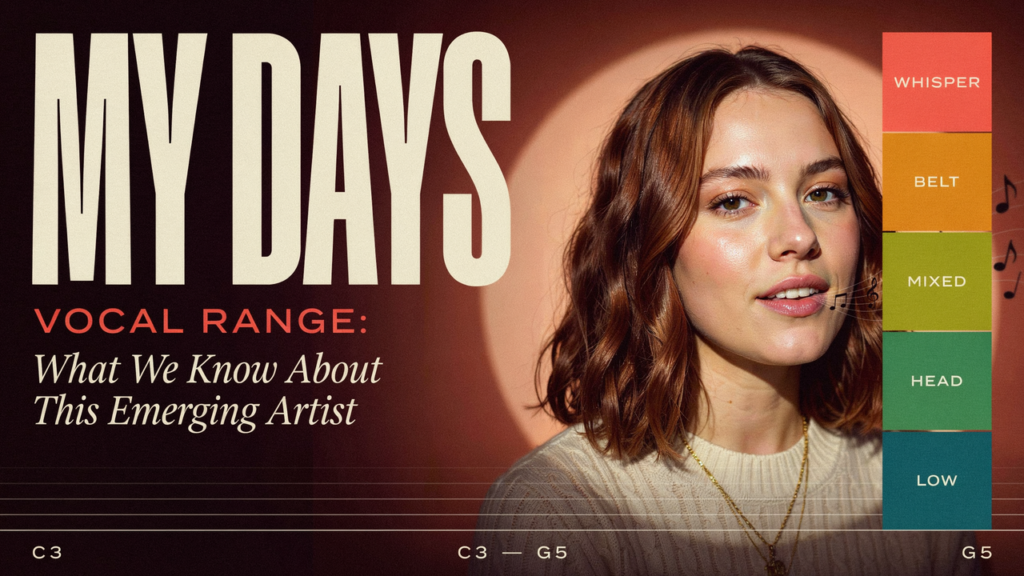
What We Know: The Evidence Available
The URL structure of this page (vocalrangetest.com/my-days-vocal-range) suggests My Days is a vocalist whose work has generated enough listener interest to warrant a vocal range profile, even if mainstream documentation is limited.
When detailed documentation isn’t available, the most useful approach is to:
Listen to the recordings directly. The actual recordings are the most reliable primary source for understanding any vocalist’s instrument. If you’re familiar with My Days’ music, the voice type classification can often be estimated from the following markers:
- The tessitura — the range where the voice sounds most natural and resonant — indicates voice type
- The timbre — dark and rich suggesting lower voice types; bright and forward suggesting higher ones
- The upper register — how high notes are accessed (chest belt, mixed voice, head voice, or falsetto) and where the voice opens up most naturally
Use the vocal range finder. The vocal range finder on this site can help you determine how your own range compares to what you hear in My Days’ recordings, and the voice type test will classify your instrument for direct comparison.
How to Identify Voice Type From Recordings
If you’re trying to determine My Days’ voice type from their music, the tenor vs baritone and soprano vs mezzo-soprano comparison pages cover the specific acoustic markers that distinguish voice types — applicable to any singer regardless of documentation level.
The average vocal range page gives context for where most singers sit, which is useful as a baseline for comparison.
A Note on Documentation and Emerging Artists
The vocal range profiles that can be written with the most confidence are those of artists with:
- Years of recorded material in multiple contexts
- Independent vocal analysis from trained coaches or musicologists
- Sufficient media coverage to generate verifiable biographical information
For artists earlier in their careers or with more limited mainstream reach, the honest position is to acknowledge what isn’t documented rather than fabricate specific note ranges that aren’t supported by evidence. As My Days’ career develops and more vocal documentation becomes available, this profile will be updated accordingly.
FAQs
Who is My Days?
My Days is an artist for whom mainstream biographical documentation is limited at the time of writing. If you have information about this artist’s background, nationality, primary genre, or formal training, using the search function on this site may help locate more specific information.
How can I find out if my vocal range is similar to My Days’?
The vocal range finder will map your specific notes, and the singer comparison tool lets you compare your range against documented singers. Once more documentation is available for My Days, direct comparison will be more meaningful.
Erika Parker is a vocal analysis and singing education writer at Vocal Range Test. She focuses on vocal range testing, voice type analysis, pitch recognition, and singing tools for vocalists, musicians, choir singers, and beginners.